Iodine, Total Body Voltage, and the Blood Environment: Why Thyroid Function Is Electrical
Thyroid physiology is often discussed in terms of hormones, lab values, and glandular output. While these markers are useful, they do not tell the full story. In clinical practice, many patients continue to experience symptoms of thyroid dysfunction despite “normal” bloodwork. This disconnect points to a deeper layer of regulation—the electrical environment of the body.
Iodine plays a central role in this conversation. Beyond its biochemical function, iodine directly influences blood terrain, total body voltage, and autonomic balance. When viewed through the lens of electric medicine, iodine becomes not just a nutrient, but a critical regulator of physiological signaling.
🎥 Watch the Training Below
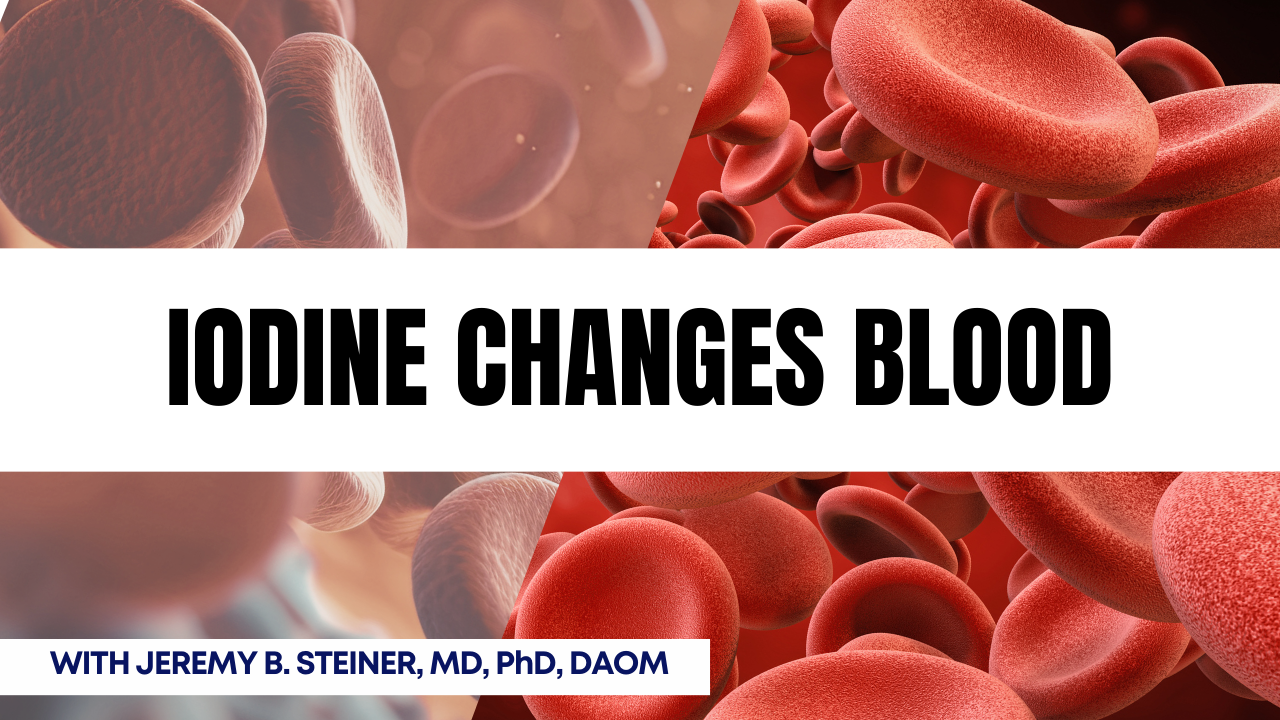
In this training, Dr. Jeremy Steiner explains how iodine impacts red blood cell behavior, total body voltage, and thyroid function, and why these electrical effects matter clinically. The discussion also explores environmental interference, halogen competition, and how autonomic stress patterns show up in real patient cases.
📥 Free Practitioner Resource: Iodine, Voltage, and Thyroid Physiology
To support your clinical understanding, we’ve included a free downloadable resource that breaks down how iodine, total body voltage, and thyroid physiology interact electrically—specifically for acupuncturists and practitioners using electric medicine principles.
👉 Download the free resource below
Use it as a reference for clinical decision-making, patient education, and treatment planning.
The Blood as an Electrical Tissue
Blood is not just a transport medium—it is an electrically active tissue. Red blood cells carry surface charges that allow them to repel one another and move efficiently through the vascular system. When electrical integrity is compromised, red blood cells begin to aggregate, reducing oxygen delivery and impairing tissue metabolism.
Research has demonstrated that electrical interventions can reverse red blood cell clumping. Notably, iodine supplementation has shown similar effects, improving blood terrain and supporting proper cellular separation. This positions iodine as a key player in restoring electrical coherence within the blood.
Total Body Voltage and Thyroid Function
Approximately 60% of thyroid function is dependent on total body voltage, not just hormone production. Blood, connective tissue, and neural signaling all contribute to this electrical environment. When voltage is low, thyroid signaling becomes inefficient—even when hormone levels appear adequate on lab testing.
This explains why patients may present with classic hypothyroid symptoms despite “normal” TSH, T3, or T4 values. The issue is often not hormone availability, but signal transmission.
Iodine Deficiency and Halogen Competition
Modern diets provide far less iodine than in previous generations due to changes in farming practices and food processing. At the same time, environmental exposure to competing halogens—particularly fluoride—has increased.
Fluoride can displace iodine at receptor sites, leading to the formation of non-functional or “false” thyroid hormone. These patterns often show up as reverse T3 or reverse T4, which are not reliably captured by standard thyroid panels. Over time, this interference can contribute to thyroid scarring and long-term dysfunction.
The Importance of Co-Factors
Iodine must be supported with appropriate co-factors, especially selenium. Without them, iodine signaling can become dysregulated and potentially contribute to autoimmune patterns such as Hashimoto’s thyroiditis.
When properly supported, iodine contributes to:
-
Improved immune resilience
-
Healthier bladder and urinary tract function
-
Reduced infectious load
-
Greater resistance to environmental toxins
These effects are best understood through terrain-based medicine, not symptom suppression.
Autonomic Stress, Dental Interference, and Endocrine Imbalance
Thyroid dysfunction rarely exists in isolation. Dental extractions—particularly wisdom teeth—can create silent interference patterns that chronically stimulate the sympathetic nervous system. Over time, this persistent “on” signal contributes to adrenal fatigue and secondary thyroid imbalance.
From an electric medicine perspective, these patterns frequently involve fire channels, adrenal stress, and unresolved scarring—often compounded by emotional trauma. Addressing these leaks is essential for restoring endocrine stability.
Integrating Electric Medicine Clinically
Electric medicine provides a framework that unifies:
-
Blood environment
-
Autonomic regulation
-
Endocrine signaling
-
Structural and emotional interference
Rather than chasing isolated symptoms, practitioners can identify where voltage is leaking and restore coherence across the system.
📥 Download the Free Resource
If you’d like to deepen your understanding of how iodine, total body voltage, and thyroid physiology intersect clinically, be sure to download the free practitioner resource below.
👉 Download the resource now
And if you found this training helpful, consider sharing it with a colleague who would benefit from a more electrical approach to thyroid health.
Best Dr. Jeremy
Take the Next Step
Watch it on YouTube: https://youtu.be/wHKjlkYaS7g
Watch the full training and learn the terrain pain protocol step-by-step here: https://electroacupunctureinstitute.com/92
Stay curious, keep testing, and keep exploring the bridge between the body’s electrical and biological systems—because understanding that connection is where real healing begins.
Jeremy Steiner, MD, PhD, DAOM
Head Educator at The Electro Acupuncture Institute
For more great trainings go here: https://electroacupunctureinstitute.com/blog/